


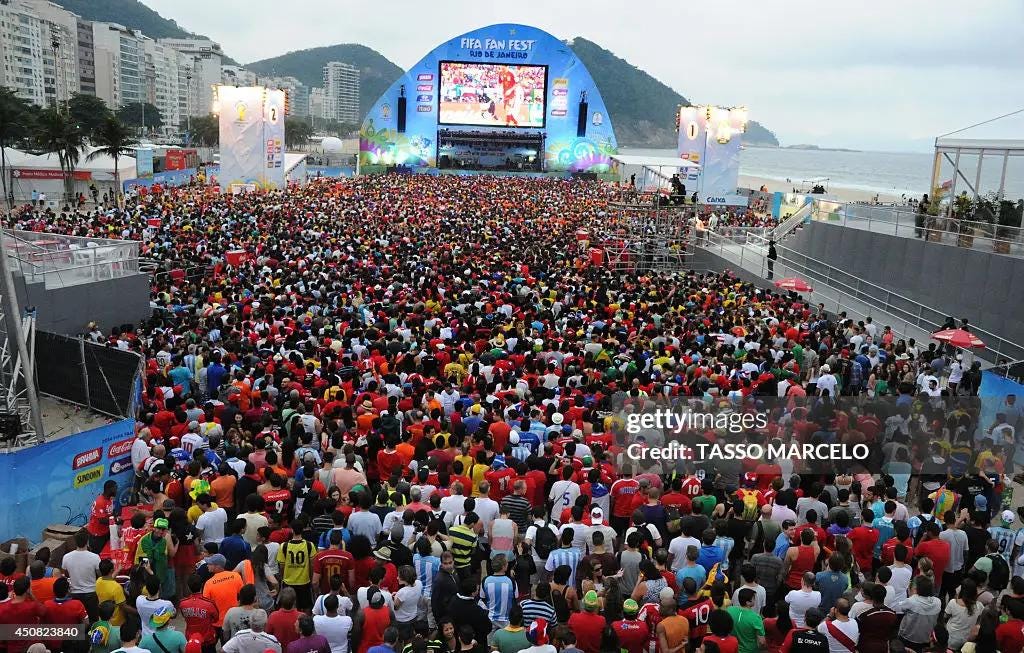
Mission Accomplished!
A Tournament for the Ages: How the World Cup Captured global Passion and Redefined American Sports Culture
The 2026 FIFA World Cup, hosted across the United States, Canada, and Mexico, stands out as a historic milestone for global soccer. Expanding to a sprawling 48-team format and 104 matches, the tournament delivered unprecedented scale, relentless drama, and a vibrant showcase of international culture on American soil. From iconic NFL arenas transformed into soccer cathedrals to fan zones buzzing in major metropolitan centers, the World Cup demonstrated how deep soccer’s roots have grown across North America.
Global Passion Meets American Scale
The spectacle lived up to its extraordinary ambition. Packed stadiums from Los Angeles to New York showcased the pure, unbridled energy of global football culture.
The 2026 tournament redefined expectations for host nations. Venues like SoFi Stadium in California and Lumen Field in Seattle witnessed unforgettable group stage moments, high-stakes knockout thrillers, and record-breaking attendance figures.
Highlighting American Culture on the World Stage
For American sports culture, this World Cup marked a definitive shift. The United States has long been known for its distinct sports landscape dominated by the NFL, NBA, and MLB, but 2026 proved that soccer has firmly established itself in the American mainstream.
The Melting Pot on Display: Across host cities, diverse immigrant communities and passionate local supporters created atmosphere-rich tailgates and street watch parties. The host nation’s multicultural fabric allowed virtually every visiting country to feel like they were playing with home-field advantage.
Blockbuster Entertainment Integration: Embracing classic American spectacle, the tournament featured unprecedented entertainment production, culminating in a halftime show during the final—a first in World Cup history.
USMNT’s Knockout Run: The U.S. Men’s National Team fueled national enthusiasm during the group stage, securing compelling wins over Paraguay and Australia before advancing through the Round of 32 to cap off a memorable tournament campaign.
A Lasting Legacy
Beyond the pitch, the tournament created an indelible legacy. Youth participation rates, domestic league viewership, and grassroots interest have reached historic highs across North America. By pairing top-tier athletic drama with seamless hospitality and entertainment, the 2026 World Cup cemented the United States as a powerhouse host for global sport.
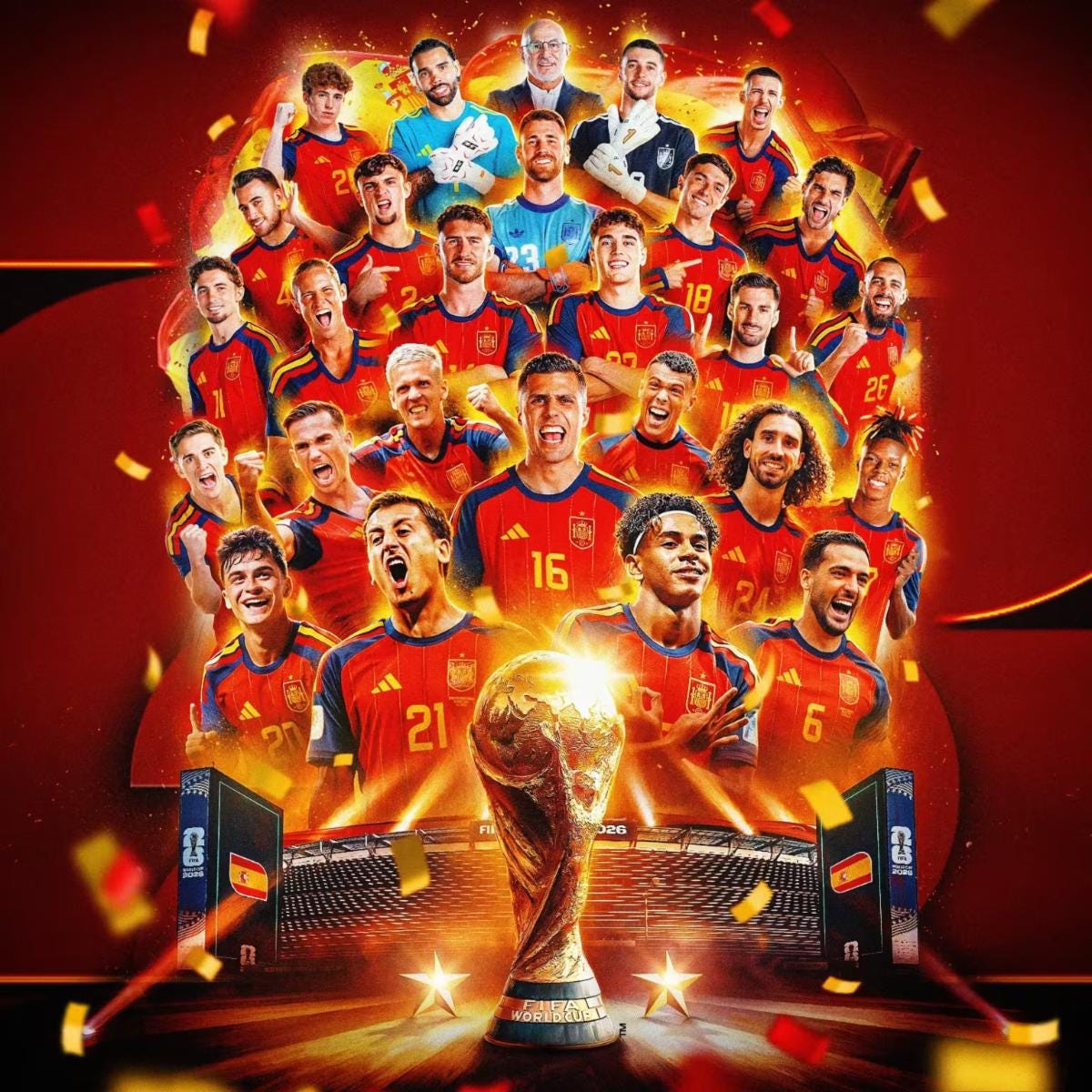
Spain Reign
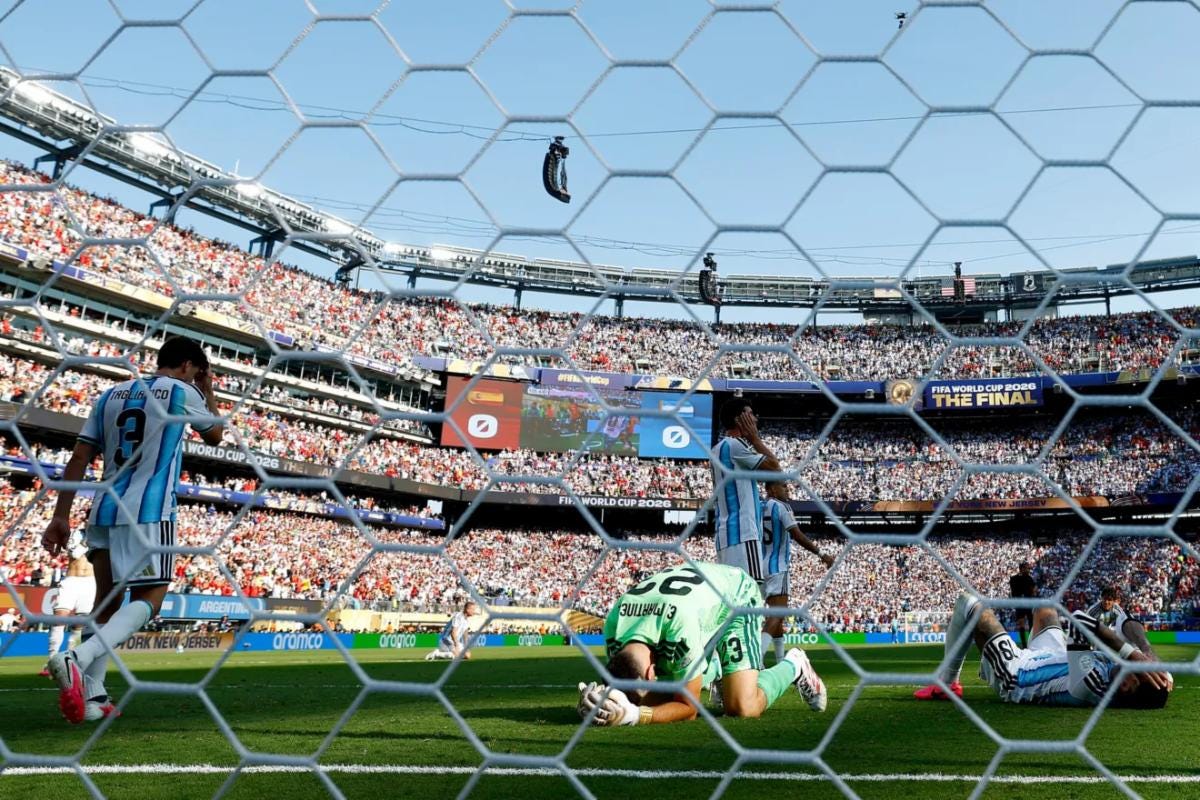
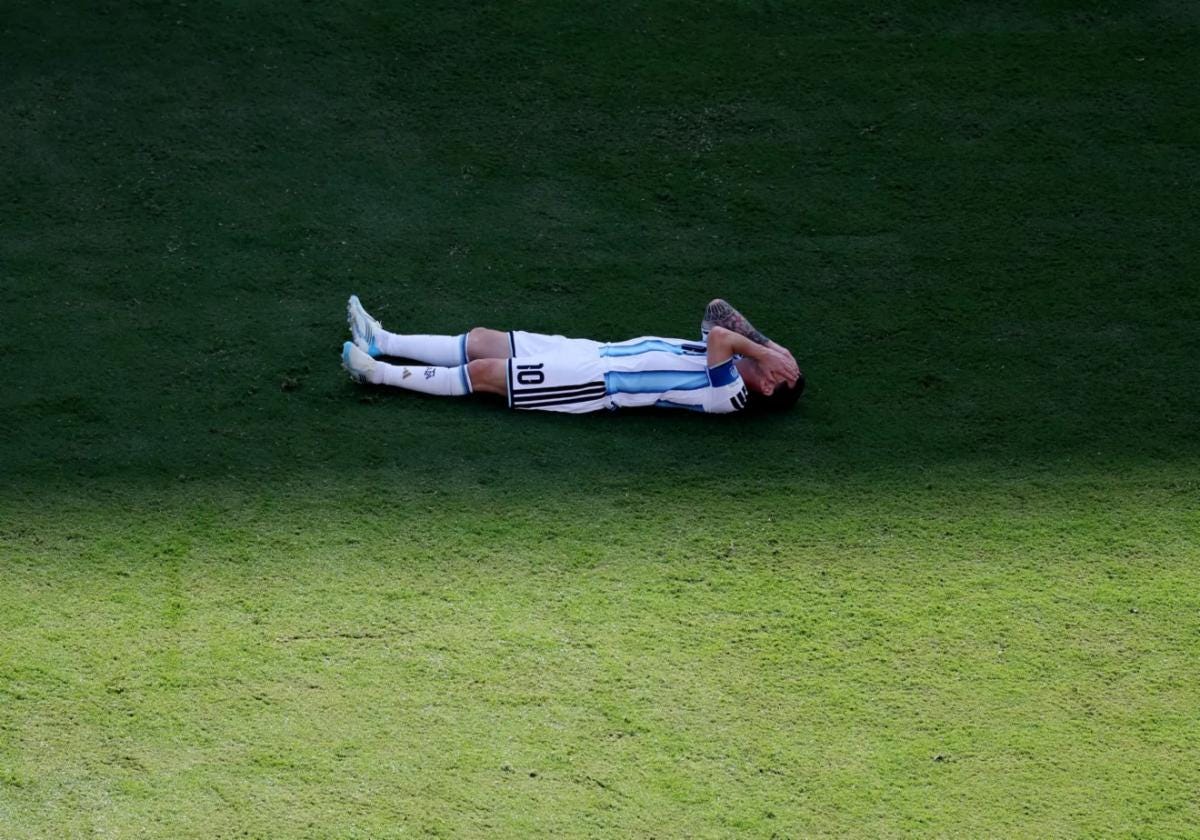
Spain standard-bearers stand at the summit of world soccer once again. In a tense, tactical clash at New York New Jersey Stadium, La Roja defeated defending champion Argentina 1–0 in extra time to win the 2026 FIFA World Cup, capping off a dominant tournament run and capturing their second star.
Extra-Time Heroics in New Jersey
After 90 scoreless minutes defined by heavy pressure, defensive discipline, and high-wire intensity, the match turned in the 106th minute. Substitute Ferran Torres broke the deadlock, firing past Emiliano Martínez after VAR confirmed the goal.
Argentina pushed relentlessly for an equalizer in the dying minutes, but Spain’s backline—anchored by Pau Cubarsí, Aymeric Laporte, and goalkeeper Unai Simón—held firm under pressure to preserve the clean sheet.
Spain’s World Cup Knockout Path
Under manager Luis de la Fuente, Spain navigated a treacherous knockout bracket to reach the final, showcasing complete tactical control across every round:
Round of 32: Defeated Austria 3–0 at SoFi Stadium.
Round of 16: Narrowly edged rivalry partner Portugal 1–0 in Dallas.
Quarter-finals: Overcame Belgium 2–1 in Inglewood.
Semi-finals: Shut out France 2–0 in Dallas to book their place in the final.
Final: Defeated Argentina 1–0 (AET) at MetLife Stadium.
With a core blending world-class experience in Rodri and Dani Olmo alongside generational talent in Lamine Yamal, Pedri, and Pau Cubarsí, Spain’s 2026 victory solidifies their modern era as one of international soccer’s finest.
Watch WC Final Highlights Here
NFL players advocate for natural grass: ‘Worth the cost’
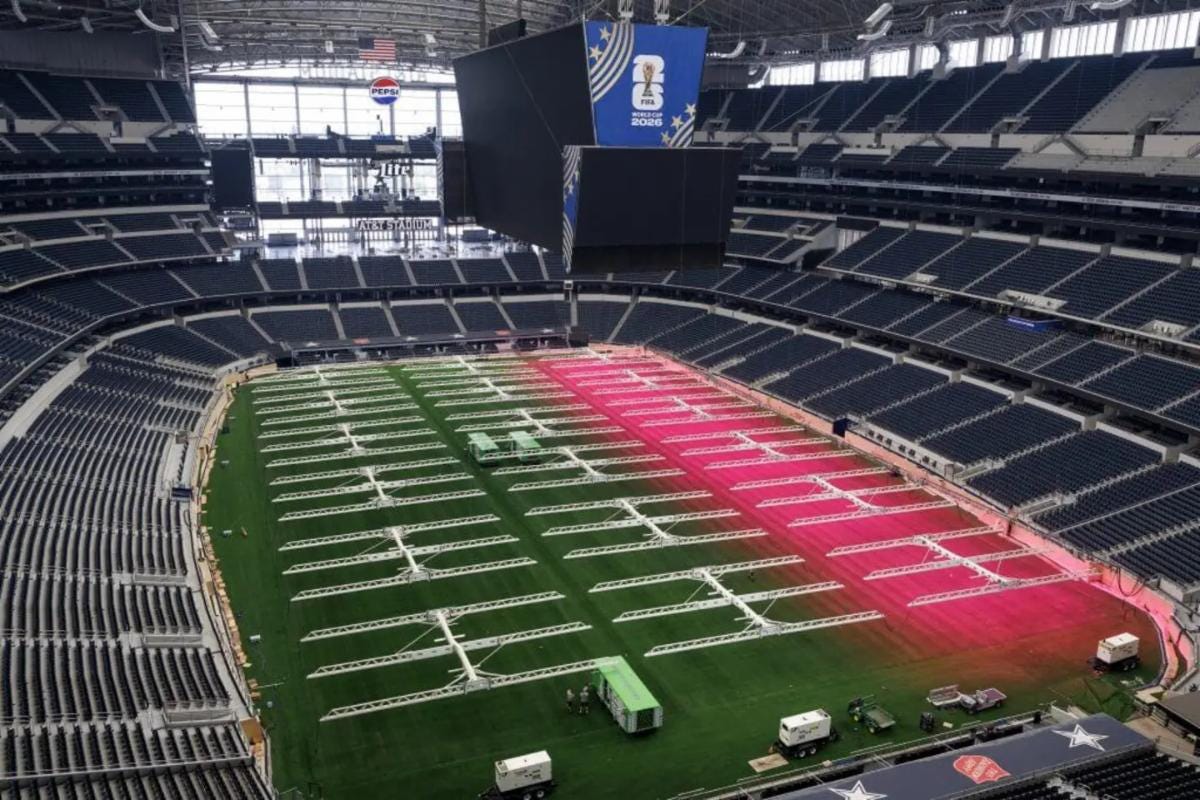
Today: NFL stadiums are tearing up that soccer grass to reinstall turf.
Are NFL players right to be upset? Let’s go.
Grass vs. Turf
George Kittle, in attendance at the World Cup final in East Rutherford, N.J., had a message for the league:
“Grass looks great at MetLife! Can we keep it that way @NFL?? Would appreciate it thanks.”
Kittle was one of many stars commenting on artificial turf lately, alongside Caleb Williams, Breece Hall and the players’ union itself:
“The temporary installation of natural grass fields for the World Cup is a choice by certain NFL team owners to do for soccer players what they refuse to do for NFL players,” the NFLPA said in a statement on June 10.
“It’s no longer a question of capability: the technology exists, the expertise exists and the resources exist to install the high-level grass fields that our players overwhelmingly prefer.”
As the battle for grass fields escalates, the lawyer in me can’t resist sharing the arguments for and against switching entirely to grass. But first, a quick look at the league’s 30 fields (remember two of them are home to two teams each):
It’s a near-even split, with 16 of 30 using grass (two of which are hybrids made up of 97 percent grass and 3 percent turf), while the other 14 are fully turf.
FIFA mandates grass fields for the World Cup, which forced the Cowboys’ AT&T Stadium and Seahawks’ Lumen Field to transform overnight.
That should end comments like these from owners:
“We don’t think we can have a quality natural grass in our stadium,” said Cowboys executive VP Stephen Jones in 2023, giving a host of reasons for why grass wouldn’t work.
Three years (and a successful World Cup) later, we have a video of Dallas staff removing natural grass after the world watched elite competitions being played on it.
So yeah, players are rightfully upset; 92 percent of them prefer grass, according to the NFLPA. But why?
Several studies have been conducted on the turf vs. grass debate, finding:
NFLPA: 28 percent higher rate of non-contact, lower-extremity injuries when playing on turf. Of those injuries, players have a 69 percent higher rate of non-contact foot/ankle injuries on turf.
NFL: However, the Titans reported Nissan Stadium had among the highest number of lower-extremity injuries from 2018-2021 ... before switching from grass to turf. (I’d say that was partly because their offense revolved around the bruising Derrick Henry and A.J. Brown, though Tennessee also had difficulty maintaining its grass.)
Since the players’ conclusions on this appear more credible overall, I can only imagine the physical toll that will be taken on the Giants and Titans, each playing 15 of their 17 regular-season games on turf this season.
The Giants play home games on the turf at MetLife, which is where star receiver Malik Nabers tore his ACL last season. It’s the same turf that claimed Aaron Rodgers’ Achilles in 2023 and Nick Bosa’s ACL in 2020.
So what’s the counter argument?
For one thing, owners want to host non-NFL events at their stadiums, including concerts, which makes it difficult to maintain grass.
That wasn’t a problem for Raiders owner Mark Davis, however, who installed a retractable field:
“That was something that I specifically had to have, was grass for safety purposes. The Raiders were not going to play on astroturf.”
Also, when it comes to owners, dollars often prevail over sense. Get it!? Cents!! Unlike that cheap line, grass is expensive.Maybe the NFL can again take a page from the World Cup and sell us the grass after each game?
Either way, expect the NFLPA to negotiate this. Whether they do it capably will be another story.
What would you do as a player, if you were forced to choose?Take a lower salary in exchange for natural grass, or stick with turf and pocket more cash?
From the Athletic
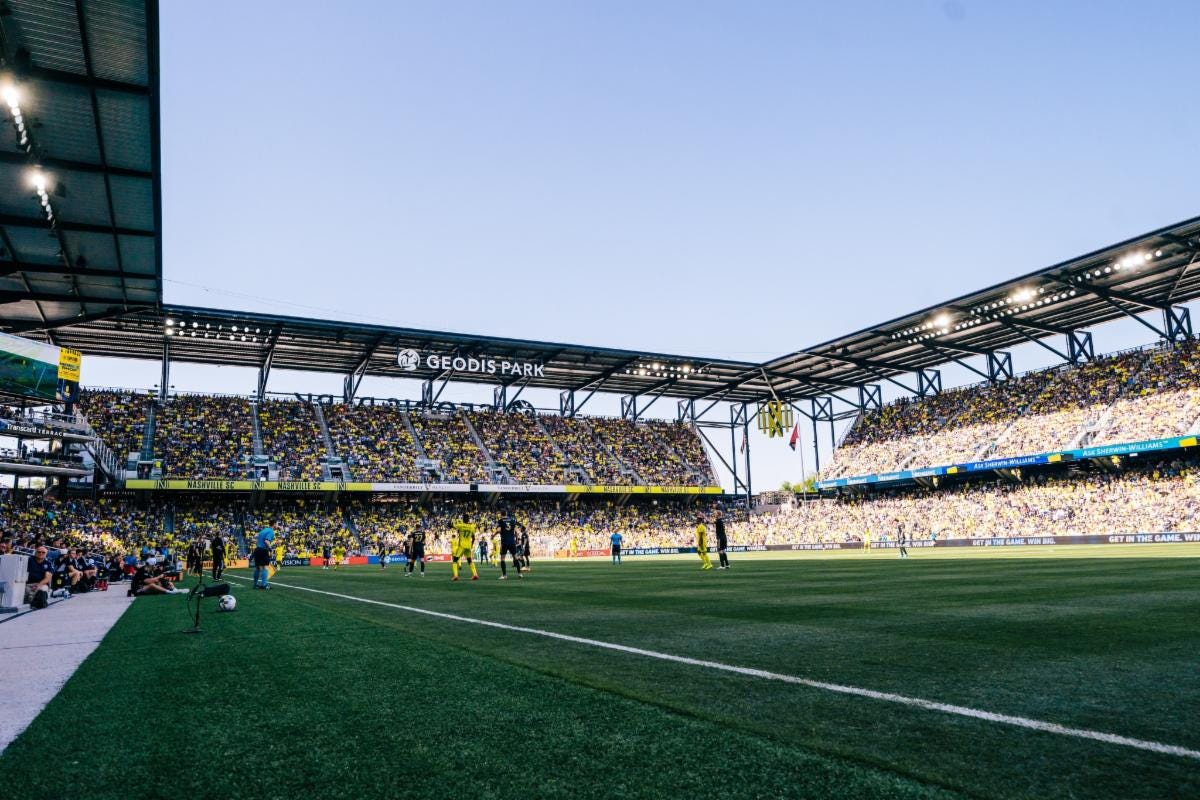
“Thanks World, We’ll Take It From Here”: How MLS Plans to Turn World Cup Fever into Lasting Growth
When the final whistle blew on the 2026 FIFA World Cup, North America closed the book on the largest sporting event in global history. But for Major League Soccer (MLS), the real work had only just begun.
Having hosted 104 matches across the United States, Canada, and Mexico, the region stood firmly established as a premier global soccer hub. To ensure the surge of casual viewer interest doesn’t evaporate, MLS launched its most ambitious initiative to date: an eight-figure national strategy titled “Thanks World, We’ll Take It From Here.”
Here is how North America’s top flight plans to capitalize on this once-in-a-generation momentum and transform newfound curiosity into permanent domestic engagement.
1. Capturing the Casual Fan Base
The fundamental challenge for MLS after 2026 is conversion. Millions of casual sports fans tuned in to watch global icons on North American soil; the league’s immediate goal is keeping them engaged at local venues.
Grassroots Onboarding: Through initiatives like “First Match On Us,” 22 MLS clubs are giving away complimentary tickets to first-time attendees, removing barriers to entry and introducing fans to live matchday environments.
Local Activation Investments: Individual clubs have put millions toward host-city fan parks and watch parties to bridge the gap between national team enthusiasm and local club culture.
2. Calendar Alignment and Transfer Flexibility
Perhaps the most significant structural evolution comes off the pitch. Historically, MLS’s spring-to-autumn schedule placed it out of step with top European leagues, hindering cross-border transfer market activity and creating mid-season international call-up conflicts.
Beginning in the summer of 2027, MLS will officially transition to a summer-to-spring calendar. This shift serves three major strategic objectives:
Global Transfer Integration: Aligns MLS windows with European and South American calendars, allowing clubs to sign prime international talent more fluidly.
Minimized Key Player Absence: Eliminates mid-season disruptions caused by international tournaments like the Gold Cup, Copa América, and future World Cups.
Elevated Sporting Standards: Facilitates talent acquisition, supporting Commissioner Don Garber’s directive to build a product capable of competing consistently on global stages like the FIFA Club World Cup.
3. Leveraging Commercial and Cultural Star Power
MLS is leaning heavily into star power and cultural overlap to maintain relevance. The marquee commercial rollout features superstar players like Lionel Messi, Son Heung-min, and Antoine Griezmann alongside high-profile celebrity club owners including David Beckham, Matthew McConaughey, and Magic Johnson.
By pairing these figures with soundtrack collaborations on major streaming platforms, the league aims to position its regular season as both a premier sporting competition and a key fixture in modern urban sports culture.
4. Commercial Leverage for Upcoming Negotiations
The post-World Cup surge directly influences two critical economic milestones on the league’s horizon:
The 2028 Collective Bargaining Agreement (CBA): Strengthened TV viewership and matchday revenue will shape upcoming labor discussions surrounding roster rules, salary cap flexibility, and player investment standards.
The 2029 Media Rights Cycle: Proving that the 2026 World Cup sparked sustainable long-term domestic viewership rather than a fleeting spike gives the league vital leverage ahead of its next media rights negotiations.
The Bottom Line
MLS has successfully established its commercial viability. The post-2026 era focuses on elevating regular-season match quality, standardizing roster structures, and nurturing a distinct North American soccer identity. By pairing localized fan acquisition strategies with global structural shifts, Major League Soccer aims to ensure that the 2026 World Cup was not merely a transient festival, but the foundational catalyst for its next chapter.